
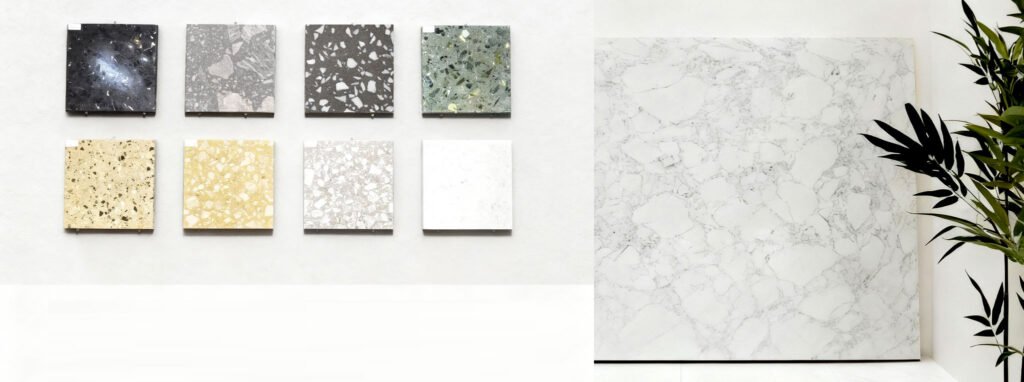
Maintenance Guide for Engineered Marble (Artificial Marble) & Engineered Quartz Stone
Engineered marble (also known as artificial marble or engineered agglomerated stone) and engineered quartz are widely used in residential and commercial projects due to their durability, aesthetics, and ease of maintenance. However, proper care and correct installation practices are essential to preserve their long-term beauty and performance.
This guide provides professional maintenance instructions, common installation issues, and full surface-restoration procedures, especially useful for contractors, project managers, designers, and end-users.
1. Daily Care & Maintenance for Engineered Marble
1. Allow Proper Curing Time After Installation
After the slabs are installed, avoid walking on the surface until:
Cement mortar hardens (minimum 24 hours), or
Adhesive reaches full bonding strength (usually 3 days, depending on the adhesive manufacturer’s instructions).
Premature load may cause uneven installation or surface damage.
2. Protect the Surface During Renovation
If other construction work continues after installation:
Do not remove the protective film.
Cover the surface with plywood, cardboard, or carpet mats to prevent scratches and contamination.
3. Prevent Sand, Dust, and Staining
At entrances, always place dust mats to reduce abrasion from sand and hard particles.
Engineered marble has microscopic pores. If stained by ink, coffee, tea, oil, or colored liquids, it must be cleaned immediately to prevent discoloration.
4. Avoid Acidic or Alkaline Cleaners
Engineered marble contains calcium carbonate—which reacts with acids and strong alkaline chemicals.
Avoid:
Tile cleaners
Bleach
Vinegar
Hydrochloric acid
Strong alkaline detergents
These will cause loss of gloss and surface etching.
Use only neutral pH stone-safe cleaners designed for engineered stone.
5. Do Not Cover the Surface for Long Periods
Long-term moisture blockage (such as old carpets with poor ventilation) prevents the stone from releasing internal moisture. This can cause:
Moisture spots
Surface dullness
Microbial growth
If carpet must be used long-term, choose high-breathability materials and ensure proper ventilation.
6. Do Not Use Regular Floor Wax
Regular floor wax is oil-based and will:
Attract dirt
Block micropores
Form sticky residue
Cause long-term dullness
Instead, use professional stone-care sealers suitable for engineered marble.
7. Schedule Periodic Professional Maintenance
To keep engineered marble glossy and long-lasting, professional maintenance is recommended every 6–12 months depending on foot traffic.
2. Common Problems After Installation of Engineered Marble
Improper installation is the leading cause of performance issues. Below are typical job-site problems.
1. Black Joints (Dirty Grout Lines)
Cause:
Grouting done too early (before moisture inside mortar evaporates)
Dust contamination from construction sites
Best practice:
Grout 12 days after installation to avoid moisture pushing dust to the surface.
2. Hollow Sound / Debonding
Caused by:
Mortar mixture too wet
Poor cement–sand ratio
Uneven adhesive thickness
Adhesive incompatible with engineered marble (low absorption rate)
Engineered marble is dense and non-porous. Excess moisture cannot escape, resulting in weak bonding and hollow spots.
3. Scratches & Loss of Gloss
Occurs when:
The surface is not protected during ongoing construction
Sand, debris, quartz particles scratch the surface
Tools or machinery drag across the floor
4. Cracks
Reasons:
No fiberglass mesh backing (stone becomes more brittle)
Excessive force or hammering during installation
Improper transportation or handling
Mortar shrinkage pulling from below
Cracks may appear several days after installation as moisture evaporates and creates tension.
5. Bulging or Middle-Raised Sections
Caused by:
Thick layer of strong alkaline cement slurry under the stone
Engineered marble cannot breathe; moisture rises upward
Alkali attacks the backside and creates upward pressure
This often results in triangular or patterned surface cracks.
3. Full Restoration & Grinding Process for Engineered Marble
When the surface is damaged, scratched, uneven, or dull, a full diamond-grinding restoration process is required.
Step 1. Release Trapped Moisture
Drill 6mm holes in bulged or swollen areas and use a suction machine to remove moisture.
Step 2. Inject Water-Based Epoxy
Water-based epoxy fills gaps, strengthens weak areas, and bonds internal micro-cracks.
Allow 24 hours for complete curing.
Step 3. Repair Cracks with Resin + Stone Powder
Use:
Unsaturated polyester resin (307 resin)
Stone powder matching the slab color
Fill cracks and pinholes, then flatten with diamond abrasives.
Step 4. Rough Grinding
Use:
50#, 150# diamond abrasives
Avoid water-drip polishing to prevent uneven waves
Rough grinding accounts for 40% of the entire job and ensures flatness.
Step 5. Fine Grinding
Use:
300#, 500#, 1000# diamond resin pads
Gloss reaches ~50° after 1000#.
Step 6. Polishing
Use:
2000#, 3000# diamond pads
Professional polishing powder or cream
Machine:
2HP+ / 175–210 RPM / 70kg weight
Gloss can reach 80° or higher.
Step 7. Crystallization & Hardening Treatment
Use:
Crystallization steel wool pads (#1)
Professional stone crystallizer
This creates a glassy, dense, durable protective layer that is:
Water-resistant
Stain-resistant
Anti-slip
High-gloss
Conclusion
With proper installation, daily care, and periodic professional maintenance, engineered marble and engineered quartz can maintain their beauty and performance for many years. Following the guidelines above helps prevent problems such as:
Cracks
Hollow spots
Dullness
Moisture issues
Scratches
This guide is suitable for:
Builders
Contractors
Designers
Hotel/real estate developers
Homeowners